
 Pay Stubs
Gross Pay vs. Net Pay: What’s the Difference? (With Examples)
Gross pay is the total you earn before anything is taken out. Net pay is the money you actually take home after taxes and deductions.
What Is Gross Pay?
Gross pay is your total earnings for one pay period, before any taxes or deductions. It is the biggest number on your pay stub. You may also see it called gross wages or gross earnings.
What counts toward gross pay?
Gross pay covers more than your base wage. It usually includes:
- Regular hourly wages or salary
- Overtime pay
- Bonuses and commissions
- Tips you report to your employer
- Paid vacation, sick, and holiday pay
How do you calculate gross pay?
The math depends on how you get paid.
Hourly workers: multiply your hourly rate by the hours you worked. Then add any overtime.
Salaried workers: divide your yearly salary by the number of pay periods in a year.
What Is Net Pay?
Net pay is what is left of your gross pay after your employer subtracts taxes and deductions. It is the amount that lands in your bank account or on your check. Most people call it take-home pay.
How does gross pay become net pay?
Two subtractions namely taxes and deductions turn gross pay into net pay.
Taxes include federal income tax, Social Security tax (6.2%), Medicare tax (1.45%), and state or local income tax where they apply. The IRS lists the current Social Security and Medicare withholding rates on its website.
Deductions include health insurance premiums, retirement plan contributions, union dues, and court-ordered wage garnishments.
How do you calculate net pay?
Use this simple formula:
Net pay = Gross pay − Taxes − Deductions
Your employer’s payroll system does this math for you. You can still run it yourself to check that your pay is right.
What Is the Difference Between Gross Pay and Net Pay?
The main difference is timing. Gross pay is measured before taxes and deductions are subtracted from your income. Net pay is measured after deductions and taxes have been deducted.
What Do Gross Pay and Net Pay Look Like? Three Examples
These examples use simplified numbers. Your federal and state withholding will differ based on your W-4 form, filing status, and state.
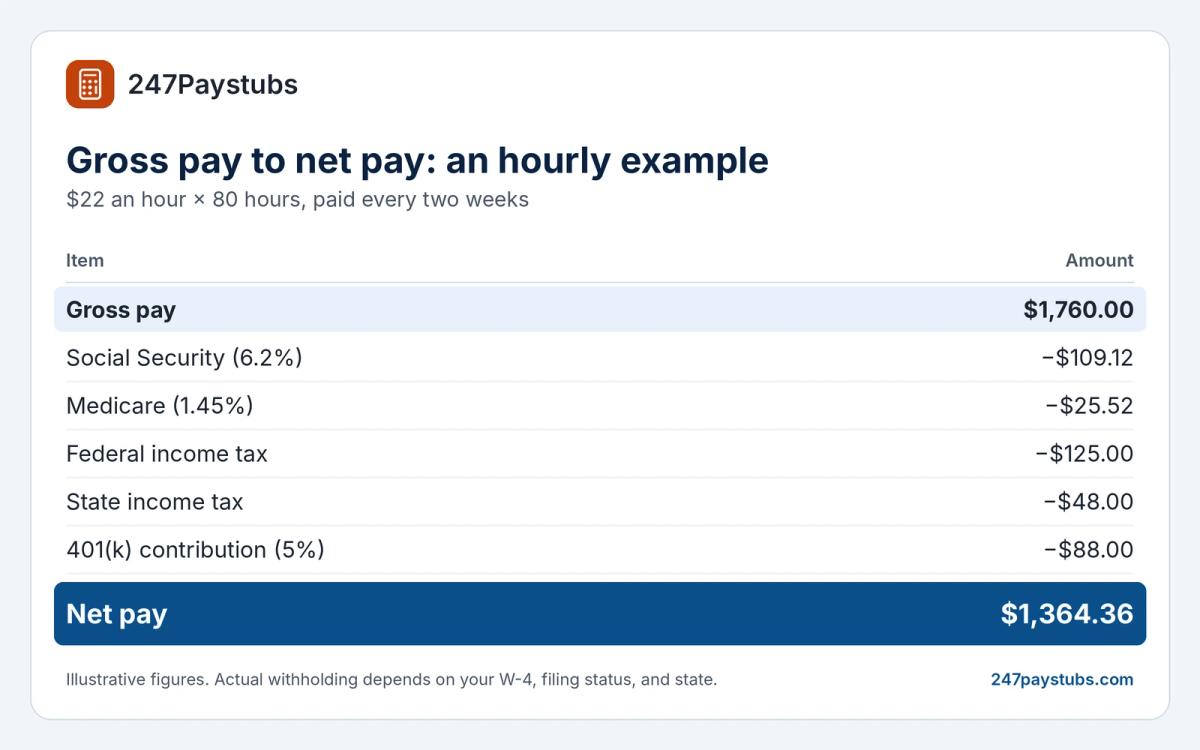
Example 1: An hourly worker
Maria earns $22 an hour and works 80 hours in a two-week pay period. Her gross pay is 80 × $22 = $1,760.
Example 2: A salaried worker
James earns $60,000 a year and gets paid every two weeks. His gross pay per check is $60,000 ÷ 26 = $2,307.69.
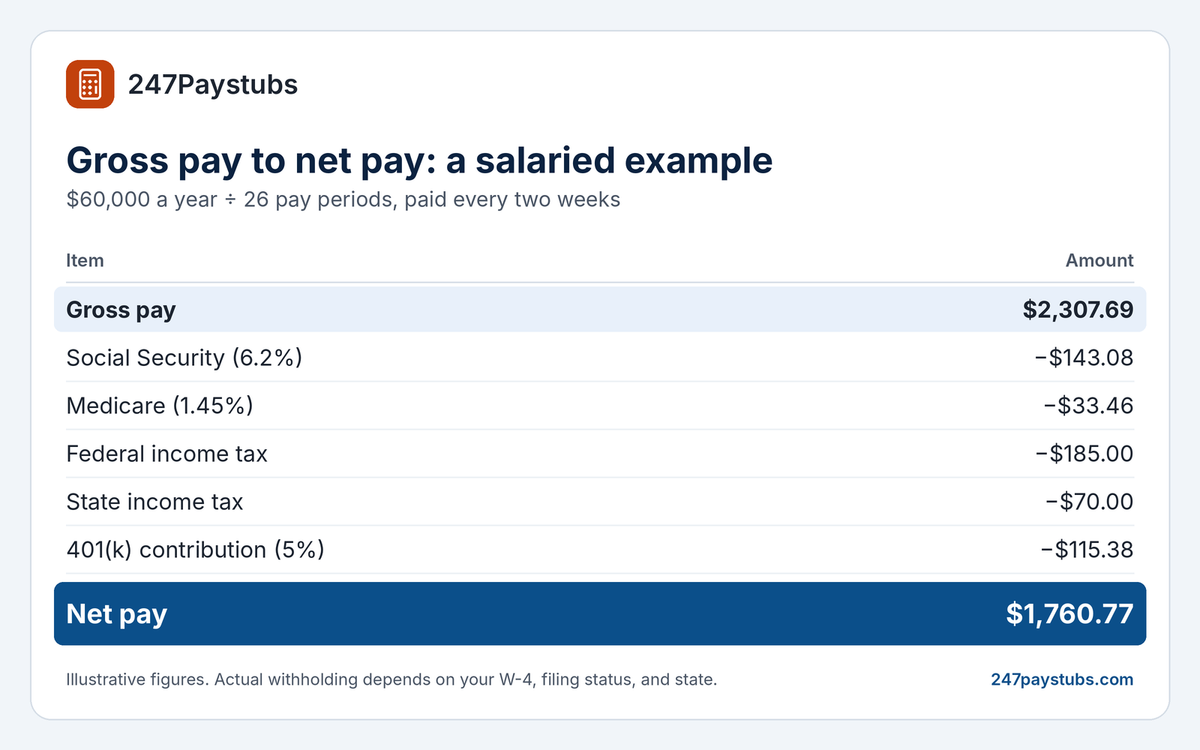
James takes home about 76.3% of his gross pay.
Example 3: A worker with overtime
Dana earns $20 an hour and works 45 hours in one week. Federal law generally requires employers to pay overtime at 1.5 times the regular rate for hours over 40 in a workweek.
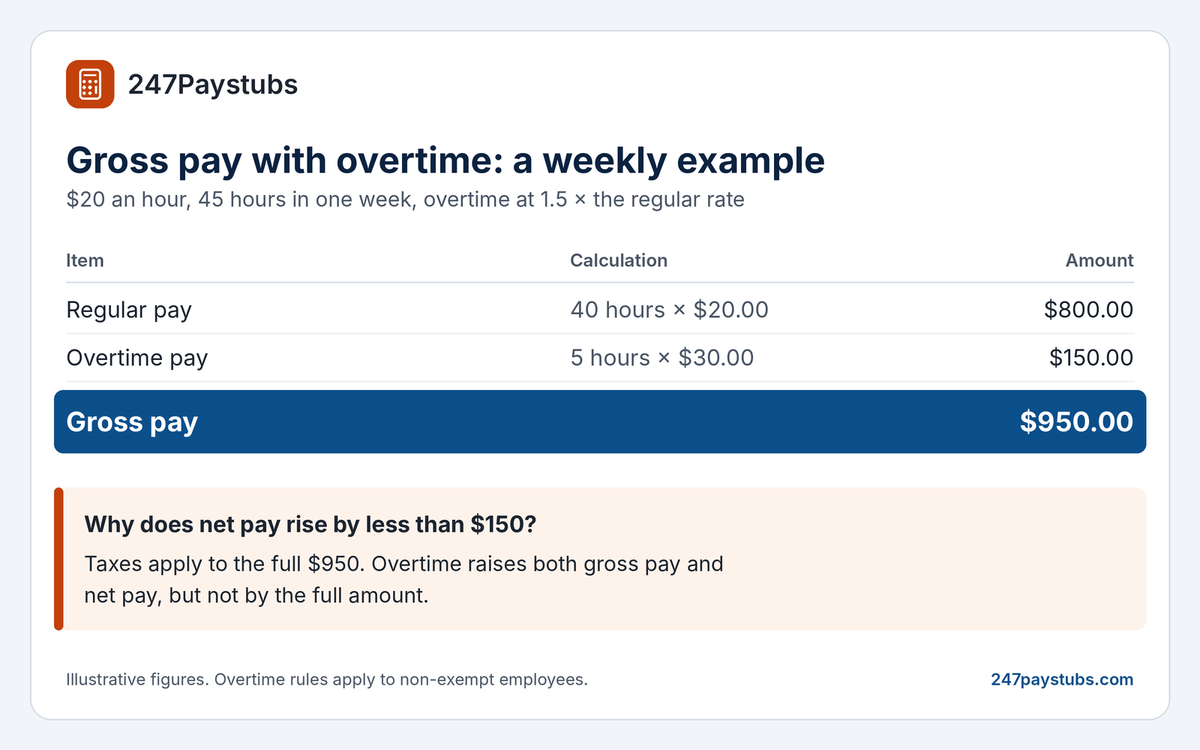
Dana’s gross pay is 40 × $20 = $800, plus 5 × $30 = $150 in overtime. That totals $950. Taxes apply to the full $950, so overtime raises both gross pay and net pay, but not by the full amount.
Why Is My Net Pay Lower Than My Gross Pay?
Your net pay is lower because taxes and deductions come out before you see the money. For many workers, the gap is around 20% to 30% of gross pay, though it varies a lot.
What are pre-tax and post-tax deductions?
Pre-tax deductions come out before income tax is figured. Many health plans and traditional 401(k) contributions work this way. They lower the wages used to calculate your income tax.
Post-tax deductions come out after taxes. Roth retirement contributions and wage garnishments are common examples.
Can you change how much tax is deducted?
Yes, within limits. Your federal withholding depends on the information you give your employer on Form W-4, the Employee’s Withholding Certificate. If your life changes, such as a new job, marriage, or child, review the form and update it with your employer.
Why does my net pay change from check to check?
Net pay moves when your gross pay or deductions change. Common reasons include overtime, bonuses, unpaid time off, and new benefit choices. Open enrollment changes can also shift your deductions in January.
Where Do You Find Gross Pay and Net Pay on a Pay Stub?
Most pay stubs list gross pay near the top, in the earnings section. It may be labeled “Gross Pay” or “Total Earnings.” Net pay usually appears near the bottom, labeled “Net Pay” or “Take-Home Pay.”
Many stubs also show year-to-date totals for both numbers. Our article on the meaning of a pay stub, with a 2026 example walks through the full layout line by line. You can also see a finished layout with our online pay stub generator.
Should You Use Gross Pay or Net Pay?
It depends on what you are doing.
When should you use net pay?
Use net pay for your monthly budget. It is the money you can actually spend, save, or use to pay bills. Planning around gross pay can leave you short.
When should you use gross pay?
Use gross pay when you compare job offers or talk about salary. Employers often quote pay before taxes.
Lenders and landlords also often ask for gross income on applications. Always read the form, because some ask for net income instead.
Can You Increase Your Net Pay?
Yes. You can raise your take-home pay in a few honest ways. First, earn more gross pay through a raise, extra hours, or a better-paying job.
Second, review your withholding. If you get a large refund every year, you may be having too much tax taken out each paycheck. Adjusting your W-4 puts more money in each check.
Third, look at your deductions. Make sure each one is still something you want and need. Do not lower your withholding too far. If too little tax comes out, you could owe money at tax time.
What Should You Remember About Gross Pay and Net Pay?
Gross pay is what you earn. Net pay is what you keep. The gap between them is made up of taxes and deductions. Check both numbers on every stub and use net pay when you plan your budget. Tn.
Gross Pay vs. Net Pay FAQs
Is gross pay or net pay higher?
Gross pay is always higher. It is your pay before taxes and deductions. Net pay is what remains after those amounts come out.
Is net pay the same as take-home pay?
Yes. Net pay and take-home pay mean the same thing. Both describe the amount you receive after taxes and deductions.
Do you pay taxes on gross pay or net pay?
Taxes are based on your gross pay, minus any pre-tax deductions. They are not figured on your net pay. Your employer withholds the tax from each paycheck.
What percent of gross pay is net pay?
It varies by person. Many workers keep somewhere around 70% to 80% of their gross pay. Your share depends on your income, state, filing status, and deductions.
Should I list gross or net income on a loan application?
Most loan applications ask for gross income, which is your income before taxes. Read each form carefully, since the wording differs. If you are unsure, ask the lender.
How do I calculate net pay from gross pay?
Subtract your taxes and deductions from your gross pay. Your pay stub lists each amount, so you can add them up and check the result against the net pay line.

Ken Woods is a certified accountant and payroll expert with over 10 years' experience in the field.